Senior Housing and the Loneliness Epidemic: Design as Medicine
Dr. Priya Nair
Head of Community Design
Social isolation among seniors is a public health crisis as serious as many physical diseases. How intentional housing design can be one of the most powerful interventions available.
The Loneliness Crisis
The statistics are sobering. According to Health Canada, approximately one in five seniors reports severe loneliness, and researchers have found that chronic social isolation carries health risks comparable to smoking 15 cigarettes per day. Among seniors who've recently transitioned to new housing — especially after losing a spouse or leaving a long-time home — the risk is even higher.
Housing design cannot solve loneliness on its own. But it can make social connection dramatically easier or harder — and too much senior housing has been designed in ways that inadvertently promote isolation.
The Problem with Corridor-Based Design
The traditional senior housing model — long corridors of identical apartment doors — is socially barren by design. Residents pass each other in hallways without natural reason to stop and connect. There's no ambient community life, no shared purpose, and no gentle social infrastructure.
The result: people retreat into their units and stay there. Loneliness deepens.
Design Principles That Foster Connection
At Skombi, our senior housing communities are designed around a fundamentally different philosophy — one that uses physical space to create the conditions for spontaneous social connection.
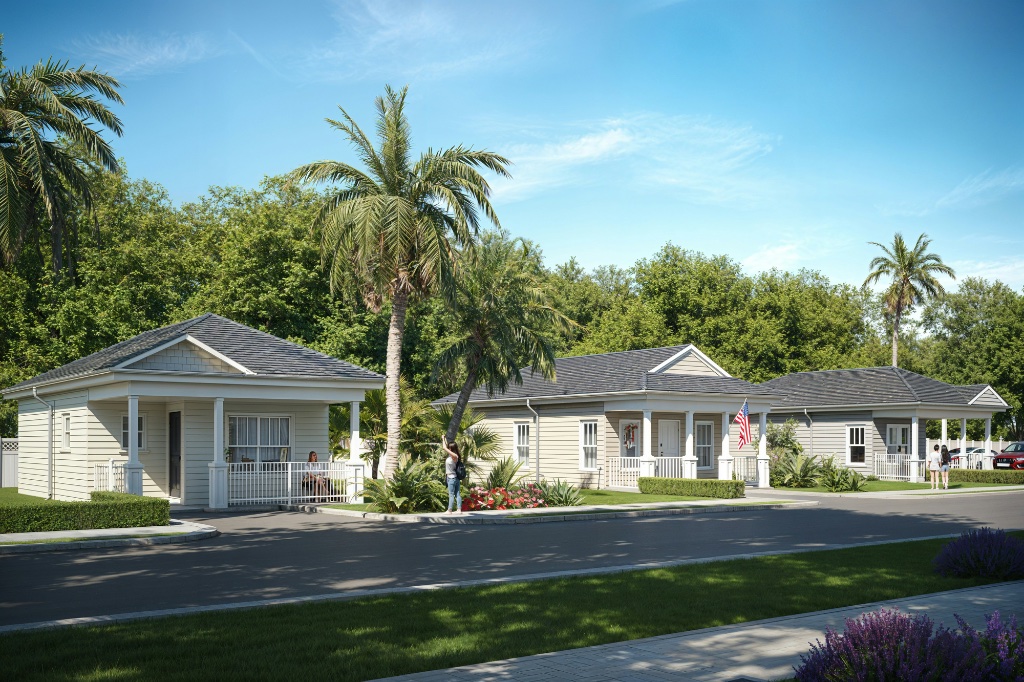
The Village Model Rather than single large buildings, we favour clusters of smaller buildings arranged around shared outdoor courtyards. This creates a neighbourhood feeling with natural gathering points.
Front Porches and Stoops Private outdoor spaces attached to each unit invite residents to be semi-public — visible to and visitable by neighbours — without requiring any formal arrangement.
Activity Streets Shared amenity buildings — dining, recreation, library, crafts — are positioned to create natural traffic flows that bring residents into regular, casual contact.
Gardens With Purpose Community gardens give residents a shared project and a reason to be outdoors and together. Horticultural therapy has documented benefits for senior mental health, and gardens are gathering points by nature.
Technology-Enabled Connection
Skombi's premium senior housing includes robust internet infrastructure and common-area smart displays that help residents know what's happening in their community — events, activities, shared interests. Technology can bridge the gap between physical proximity and actual connection.
Multigenerational Thinking
Some of the most innovative senior housing emerging globally is explicitly multigenerational — designed to attract younger residents and create organic cross-generational relationships. While not right for every project, this approach powerfully combats the age-segregation that contributes to senior isolation.
Building Connection Into the Blueprint
At Skombi, we believe the best senior housing is designed from the first sketch with connection in mind. The goal isn't just to house seniors — it's to help them thrive. And thriving, for human beings of any age, requires community.